Vehicles Recovered From Off-Road Situations
Winch Out in Eugene for passenger, commercial, and recreational vehicles stuck in mud, snow, sand, and roadside hazards
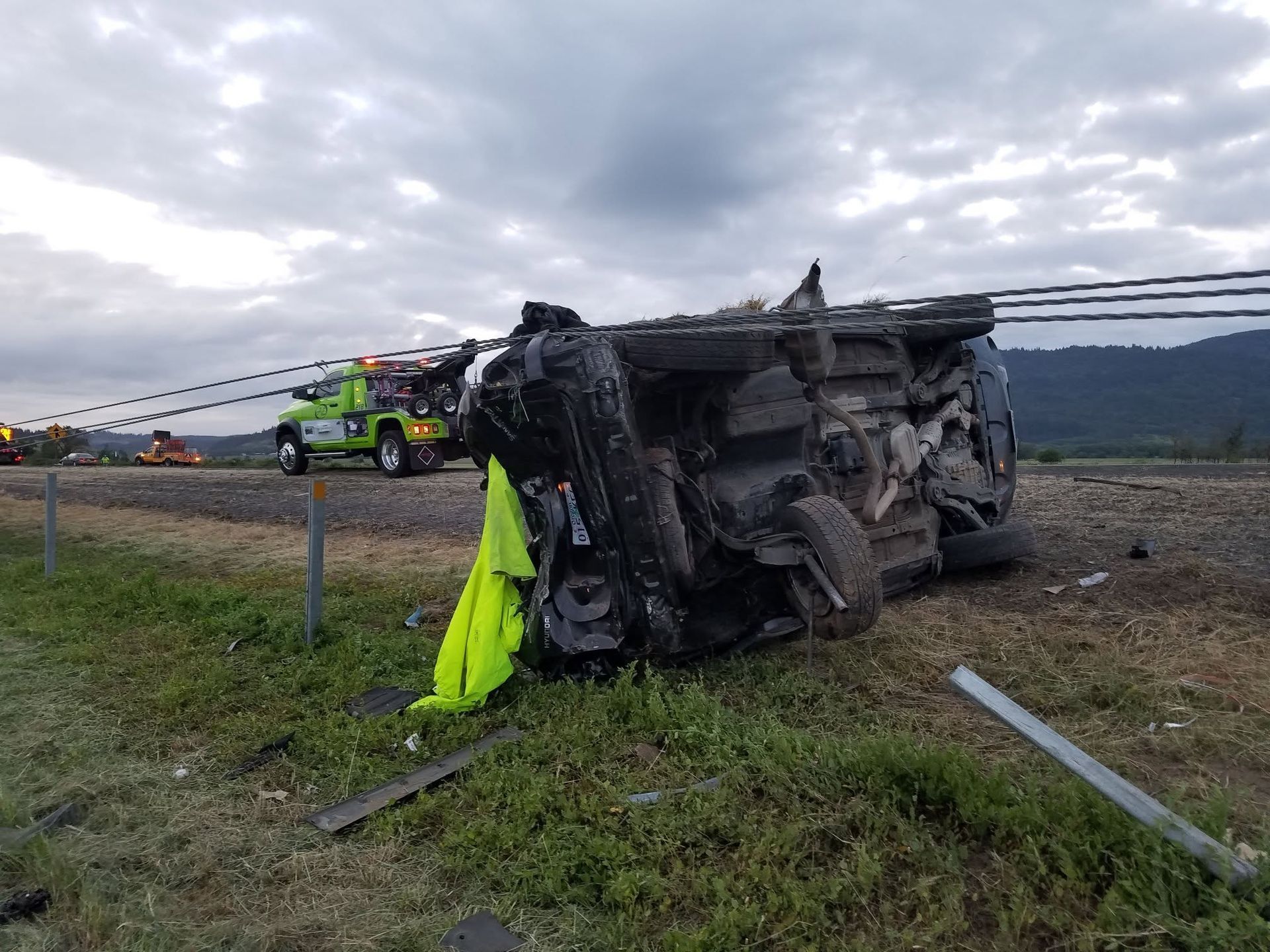
Vehicles leave paved surfaces and become immobilized when tires lose traction in saturated soil, deep snow accumulations, or loose sand that cannot support the vehicle's weight, requiring winching rather than standard towing since the vehicle cannot roll freely. AE Towing responds to winch-out requests from Eugene, Salem, and La Pine, recovering cars, trucks, commercial vehicles, and recreational equipment that have slid off roadways, become stuck in trailhead parking areas, or sunk into soft ground at construction sites and rural properties. Recovery operators assess the vehicle's position, the surrounding terrain, and anchor point availability before selecting the appropriate winch capacity and cable angle to extract the vehicle without causing additional body damage or drivetrain stress.
The recovery process involves attaching a steel cable or synthetic rope to the vehicle's frame or tow hooks, positioning the tow truck on stable ground, and using the winch motor to apply steady tension that pulls the vehicle toward solid terrain. Safe recovery methods prevent the cable from snapping under load, avoid pulling at angles that bend frame components, and ensure that the vehicle's suspension and undercarriage are not damaged during extraction from uneven ground.
Call for recovery assistance when your vehicle cannot be driven out under its own power and requires professional extraction equipment.
What You Notice Once Recovery Is Finished
Winching a vehicle from mud or snow requires controlling the extraction speed to prevent the cable from jerking, which can damage mounting points or cause the vehicle to lurch forward into obstacles. Operators monitor tire grip as the vehicle moves, adjusting winch tension to match ground conditions and prevent the tow truck itself from losing traction on slippery or soft surfaces near the recovery site.
Once the vehicle is back on stable ground, you see that it is positioned on pavement or firm soil where tires regain traction, with no new dents along the rocker panels or undercarriage from improper winch angles, and all body panels remain aligned as they were before the vehicle became stuck. The vehicle can be driven away immediately or loaded onto a flatbed if mechanical damage occurred during the incident that caused it to leave the road.
AE Towing operates in conditions common throughout Oregon's rural and mountain areas, including winter storms that leave vehicles stranded on unplowed access roads, spring runoff that softens roadside shoulders, and recreational areas where vehicles attempt off-pavement driving beyond their capability. Quick response during difficult conditions reduces the time vehicles remain exposed to weather and minimizes the risk of secondary incidents involving other motorists attempting to assist.
Common Questions About This Service
Drivers stranded off-road near Eugene often need to understand how winch recovery differs from standard towing and what determines whether a vehicle can be recovered without additional damage or complications.
What determines whether a vehicle requires winching instead of towing?
If the vehicle's tires cannot rotate freely due to being buried in mud, wedged against rocks, or sitting on ice with no traction, winching is necessary because a standard tow connection would drag the vehicle rather than roll it, causing undercarriage damage and potentially breaking axle components.
How deep can a vehicle be stuck before recovery becomes impossible?
Recovery depends more on the stability of surrounding terrain and available anchor points than the depth of the vehicle's immersion, though vehicles sunk beyond the axles in saturated clay or deep snow may require multiple winch pulls from different angles or additional equipment to lift the chassis before horizontal extraction can begin.
Can winching damage the vehicle's frame or body panels?
Properly executed winching attaches cables only to frame-mounted tow hooks or reinforced suspension points, avoiding bumpers, tie-down loops, or body panels that are not designed to handle pulling forces, and maintains cable angles that pull horizontally rather than upward, which can bend frame rails.
What happens if the tow truck cannot get close enough to the stuck vehicle?
Operators use snatch blocks to redirect the winch cable around trees, boulders, or other fixed objects, effectively extending the winch's reach and allowing recovery from positions where the tow truck cannot approach directly due to terrain obstacles or unstable ground.
Is winch-out service available during severe weather in the Eugene area?
AE Towing responds to recovery calls during winter storms, heavy rain, and other conditions that increase the likelihood of vehicles leaving roadways, though response time may be affected by road closures, chain requirements on mountain passes, or prioritization of emergency incidents involving injuries or traffic blockages.
When your vehicle is stuck off-road and cannot be driven back to pavement, AE Towing provides winch recovery throughout the Eugene region. Request immediate assistance to begin the recovery process and return your vehicle to safe, drivable ground.