Commercial Recovery Built for Multi-Axle Loads
Heavy-Duty Towing in Eugene for semi-trucks, buses, and commercial vehicles facing breakdown or accident recovery
AE Towing handles heavy-duty towing for semi-trucks, buses, large commercial vehicles, and specialized equipment across Eugene, Salem, and La Pine. When a commercial unit goes down due to mechanical failure, accident damage, or load complications, the recovery process requires specialized equipment capable of handling multi-axle configurations and significant weight. Operators trained in decking, undecking, and load shift correction work with rigging and heavy-duty wreckers designed for vehicles that standard tow equipment cannot safely move.
Heavy-duty towing involves more than vehicle transport—it includes trailer transfers when a tractor is disabled but the cargo must continue, load stabilization when shifts occur during transit, and accident recovery that may require uprighting or extricating commercial units from difficult positions. Each recovery is assessed for weight distribution, axle configuration, and site access before equipment is deployed.
Request a commercial recovery consultation to coordinate equipment and operator dispatch for your fleet needs.
What Happens During Commercial Vehicle Recovery
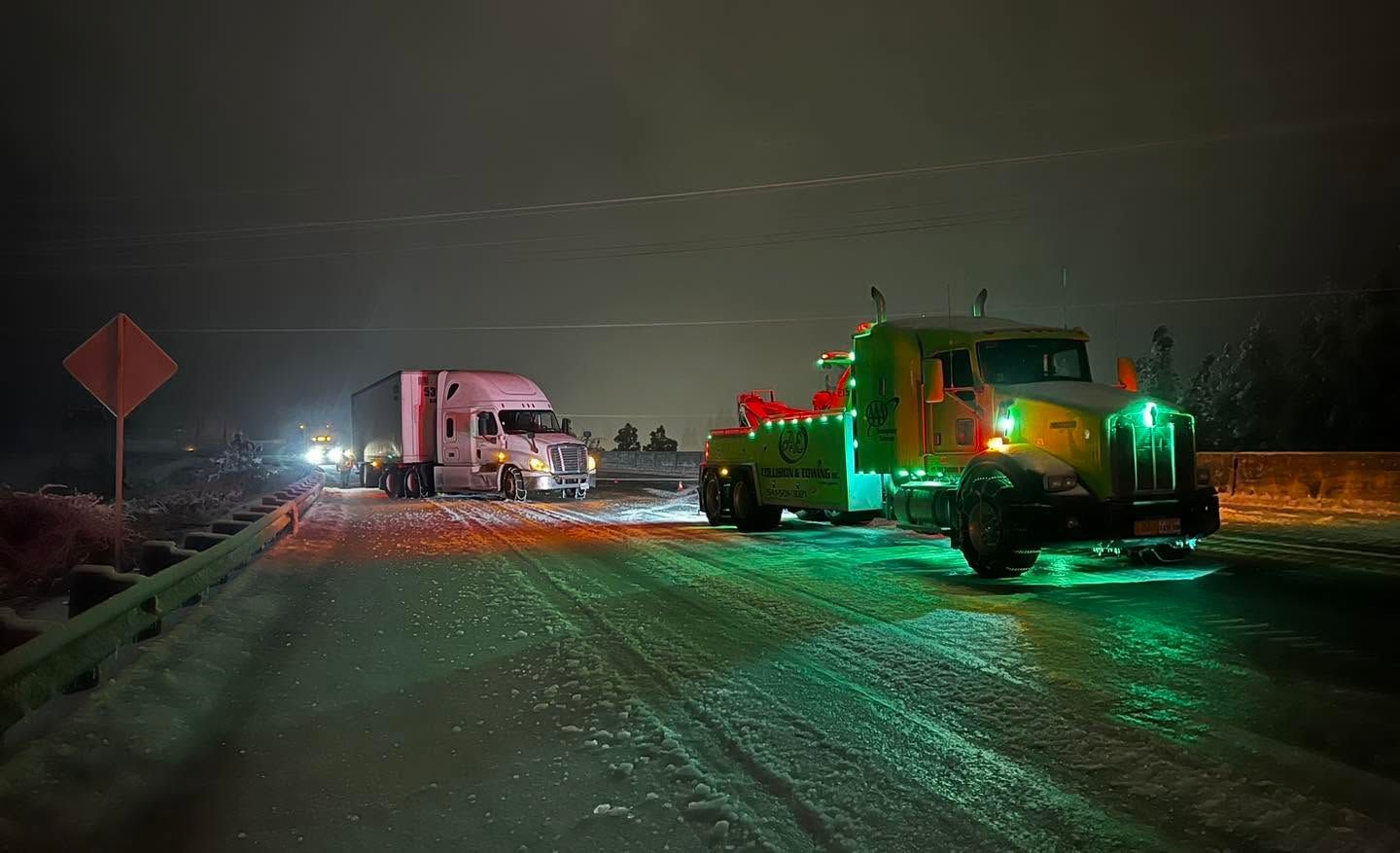
Recovery begins with an assessment of the disabled unit's weight, axle count, cargo status, and positioning. Operators determine whether decking onto a flatbed is required or if a wheel-lift configuration can safely secure the vehicle. For accidents involving rollovers or off-road positioning, rigging equipment stabilizes the unit before it is moved, preventing further damage to the frame or cargo.
Once the vehicle is secured and transported, drivers notice that cargo remains intact if properly stabilized, trailers are transferred without additional delays, and equipment arrives at the repair facility or designated location ready for inspection. Commercial operators see reduced downtime when recovery is handled with equipment matched to the vehicle's specifications rather than improvised with undersized gear.
Heavy-duty recovery also includes coordination with repair facilities, insurance adjusters, and fleet managers to streamline documentation and next steps. Operators trained in commercial vehicle systems understand how to handle air brake releases, driveline disconnections, and axle lockouts that prevent damage during transport.
Questions Fleet Managers Ask About Heavy Recoveries
Commercial vehicle operators in Eugene, Salem, and La Pine often need clarity on recovery logistics, equipment capabilities, and timing before a breakdown happens.
What equipment is used for semi-truck recovery?
Heavy-duty wreckers with hydraulic booms, underlift systems, and multi-axle configurations handle semi-trucks, while specialized decking equipment transports units that cannot roll. Rigging gear and load stabilization tools address shifts or rollovers.
How long does a commercial recovery take?
Recovery time depends on vehicle positioning, accessibility, and whether cargo must be offloaded or stabilized before transport. Roadside breakdowns on accessible highways move faster than off-road extractions or accident scenes requiring uprighting.
What happens if the trailer is loaded but the tractor fails?
Trailer transfers allow a replacement tractor to be connected so cargo continues to its destination while the disabled unit is towed separately. This reduces delays for time-sensitive freight.
When should decking be used instead of towing?
Decking is required when a vehicle's drivetrain or suspension is too damaged to roll safely, when axles are locked, or when towing would cause further mechanical harm. Flatbed transport prevents additional strain on damaged components.
What areas does heavy-duty service cover?
AE Towing dispatches heavy-duty recovery equipment from Eugene, Salem, and La Pine, with operators familiar with highway routes, rural access roads, and commercial yards throughout the region.
AE Towing coordinates heavy-duty recoveries with the equipment and experience required for commercial fleets operating throughout Oregon. Call (541) 501-3021 to arrange immediate dispatch for disabled commercial units or schedule recovery planning for your fleet.